Petroleum Import License and Petroleum Import Business Application Guide
What Permits Are Required to Import Petroleum?
Two layers of permits are required: first, under Articles 8–10 of the Petroleum Administration Act, obtain a petroleum import business operation license (limited to companies limited by shares, which must also set up or lease oil storage facilities meeting the safety stock requirement); then, before each shipment, obtain a petroleum import consent from the Energy Administration, Ministry of Economic Affairs (MOEA) (can be applied for in writing; licensed businesses may also use the online e-visa system). As of the Energy Administration's 2026-07-13 list, the only licensed petroleum import businesses are CPC Corporation, Taiwan and Formosa Petrochemical Corporation. Those without a license may apply for special-case import only under the five circumstances listed in Article 13; industries manufacturing petrochemical raw materials may separately apply under Article 12 for a special-case import of petroleum products for use as their own raw materials.
HowBridge only provides China→Taiwan consolidated shipping, with only a Shenzhen warehouse and a Taoyuan warehouse; it does not handle Energy Administration applications or petroleum customs declarations on your behalf. Our site's FAQ also lists dangerous goods (flammable and explosive items) as items prohibited from import into Taiwan. This page is a compilation of regulations; actual applications are subject to the determination of the Energy Administration, Ministry of Economic Affairs.
What Are the Two Layers of Petroleum Import Permits?
In the Petroleum Administration Act, petroleum refers to crude petroleum oil, bituminous mineral crude oil, and petroleum products; petroleum products include gasoline, diesel, kerosene, naphtha, liquefied petroleum gas, aviation fuel, and fuel oil (Article 2). Importing these oil products is subject to two layers of control — business qualification and shipment-by-shipment consent:
| Layer | Name | Basis |
|---|---|---|
| Business qualification | Petroleum import business operation license | Petroleum Administration Act, Articles 8–10 |
| Shipment-by-shipment import | Petroleum import consent (applied for in writing, or by licensed businesses via the online e-visa system) | Import Regulation Code 255; Energy Administration operating rules |
One Consent Document, One Use
The petroleum import consent issued by the Energy Administration is valid for one use only; the declared customs quantity may not exceed the approved quantity. Air-imported shipments clear customs with the written consent document.
Who Can Apply to Become a Petroleum Import Business?
The organizational form, storage facilities, application procedure, and safety stock requirements for petroleum import businesses are set out in the Petroleum Administration Act; fees are set out in the Fee Schedule for Applications to Operate Petroleum Business:
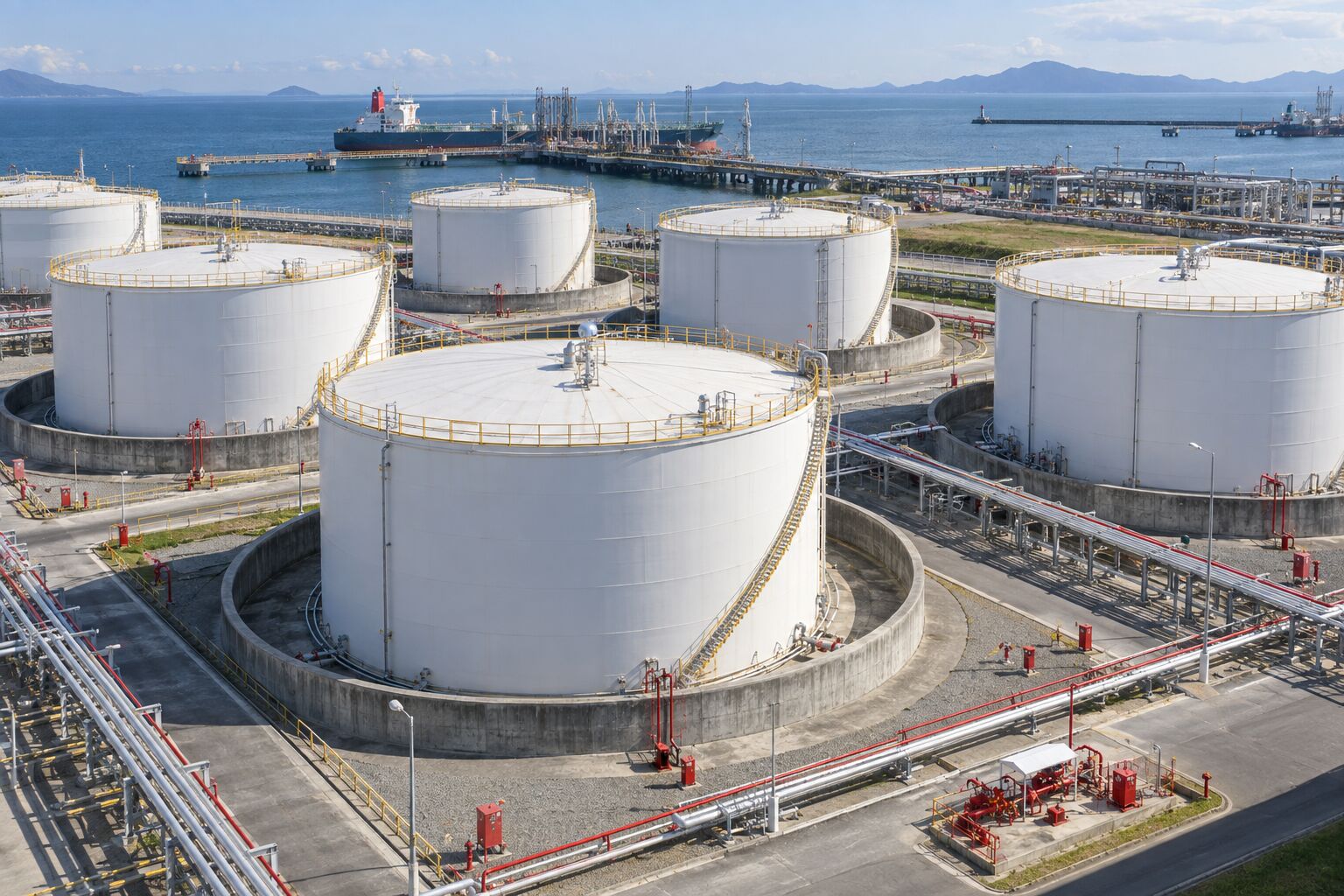
| Condition | Requirement | Article |
|---|---|---|
| Organization | Limited to companies limited by shares | Article 8 |
| Storage facilities | Set up or lease oil storage facilities meeting or exceeding the safety stock requirement | Article 8 |
| Application order | First apply for establishment approval; after the company is formed, apply for the operation license; operations may begin only once the license is obtained | Articles 9 and 10 |
| Safety stock | Not less than 60 days (25 days for liquefied petroleum gas) of the average sales and usage volume over the preceding 12 months; the total must not be less than 10,000 kiloliters | Article 24 |
| Fee | A review fee of NT$150,000 per application for establishment/operation approval (paid upon submission) and a license fee of NT$2,000 (paid upon issuance) | Fee Schedule, Article 4 |
Can Formosa Plastics Import Petroleum?
Yes. On the Energy Administration's petroleum business list updated 2026-07-13, the petroleum import businesses listed are CPC Corporation, Taiwan and Formosa Petrochemical Corporation; both are also petroleum refining businesses. The list is updated periodically; refer to the Energy Administration's latest announcement.
Which Oil Products Require Energy Administration Consent to Import?
Under Import Regulation Code 255, the following eight categories of oil products require Energy Administration consent before they can be imported (corresponding to 21 tariff codes). This list comes from the import regulations and Energy Administration operating rules; it is not enumerated article by article in the text of the Petroleum Administration Act itself.
- Naphtha
- Crude oil
- Gasoline
- Aviation fuel
- Kerosene
- Diesel
- Fuel oil
- Liquefied petroleum gas (LPG)
Importers of solvent oil or lubricating oil must file with the Ministry of Economic Affairs for record within 10 days after import, except for petrochemical manufacturers recognized by the competent industrial authority (Petroleum Administration Act, Article 12).
How Do You Obtain Import Consent for Each Shipment?
Licensed petroleum import businesses must apply to the Energy Administration for a petroleum import consent before each shipment; besides the standard written method, applications can also be made through the Energy Administration's online e-visa review system. Under the Energy Administration's operating rules:
- The online e-visa review system is available only to licensed petroleum import businesses.
- To import gasoline or diesel, you must first obtain an import permit document issued by the Ministry of Environment (formerly the Environmental Protection Administration, Executive Yuan) before applying to the Energy Administration for import consent (Air Pollution Control Act, Article 39).
- To import naphtha, you must transmit composition specifications and an inspection report to the Energy Administration.
- Only after obtaining the consent document may you declare the shipment to Customs; the declared quantity may not exceed the approved quantity.
- Before applying to import petroleum, you must first pay the Petroleum Fund to the Ministry of Economic Affairs (Petroleum Administration Act, Article 35; this page did not verify the rate, so no amount is listed).
Can You Import Petroleum Without a License?
No — not as a regular, ongoing import. Those without a petroleum import business license may apply in writing to the Energy Administration for a special-case import only under the five circumstances listed in Article 13 of the Petroleum Administration Act (industries manufacturing petrochemical raw materials may separately apply under Article 12 for a special-case import of petroleum products for use as their own raw materials). The five circumstances under Article 13 are as follows:
- Oil for refinery trial runs.
- Oil for petrochemical plant trial runs.
- Oil for research and testing.
- Special-purpose petroleum products not domestically produced and with no similar specification available.
- Petroleum products other than gasoline and diesel, packaged in containers of 1 kilogram or less.
The Energy Administration's operating rules specify that the online e-visa is limited to licensed businesses; special-case import applications must still be submitted in writing to the Energy Administration and cannot be replaced by the online system.
What Taxes Apply to Importing Oil Products?
Besides customs duty, importing oil products is also subject to commodity tax. The statutory tax amounts under Article 10 of the Commodity Tax Act are as follows; the Executive Yuan may increase or decrease them by up to 50%. The actual tax payable is subject to Customs' determination.
| Oil product | Statutory commodity tax amount |
|---|---|
| Gasoline | NT$6,830 per kiloliter |
| Diesel | NT$3,990 per kiloliter |
| Kerosene | NT$4,250 per kiloliter |
| Aviation fuel | NT$610 per kiloliter |
| Fuel oil | NT$110 per kiloliter |
| Liquefied petroleum gas | NT$690 per metric ton |
How Do You Look Up the Customs Tariff?
According to the Customs Administration's open tariff data (the file itself is undated; the server file timestamp is 2025-04-24), the column-1 tariff rate for gasoline 2710.12.10.00-1, diesel 2710.19.39.00-1, and liquefied petroleum gas 2711.19.10.00-3 is all 0%, and the import regulation code listed for all three is 255. Before importing, please verify the current data item by item using the Customs Administration's tariff lookup.
What Happens If You Import Petroleum Without a License?
Importing petroleum without having obtained a petroleum import business license and without special-case approval is punishable under Article 39 of the Petroleum Administration Act:
A fine of NT$2,000,000 to NT$10,000,000 shall be imposed, and the imported petroleum shall be confiscated; if it results in public danger, the offender shall be sentenced to up to 3 years of imprisonment, detention, or a fine of NT$1,000,000 to NT$5,000,000, which may be imposed alone or in addition to imprisonment. If a legal entity commits this offense, in addition to punishing the responsible person who committed the act, the same fine shall also be imposed on the legal entity.
Can You Ship Gasoline via Package Consolidation, Courier, or Mail?
No, you should not ship it this way. Article 37 of the Postal Handling Rules prohibits mailing flammable, explosive, or other dangerous items; gasoline, diesel, and the other oil products among the eight categories fall under Import Regulation Code 255 and require Energy Administration consent to import, while Article 3 of the Regulations Governing Customs Clearance of Sea Cargo Express Consignments excludes controlled goods and similar items from clearance in the sea cargo express zone (the regulations do not define whether oil products count as controlled goods). Importing petroleum without a license and without special-case approval is subject to the penalties in Article 39 of the Petroleum Administration Act.
HowBridge Consolidated Shipping Rules
HowBridge's FAQ lists dangerous goods (flammable and explosive items) as items prohibited from import into Taiwan, and the Prohibited & Restricted Import List also includes explosive and flammable items. Please do not ship flammable liquids such as gasoline and diesel.
What Are the Steps to Become a Petroleum Import Business and Import a Shipment of Oil?
1Apply for Establishment Approval
Attach an oil storage plan and a sales or usage plan, complete the application form, and apply to the Ministry of Economic Affairs for establishment approval as a petroleum import business (Petroleum Administration Act, Article 9).
2Complete Company Formation and Storage Facilities
Form the company as a company limited by shares, and set up or lease oil storage facilities meeting or exceeding the safety stock requirement (Article 8).
3Apply for the Operation License
After the company is formed, attach the company license and documentation for the storage facilities (a lease agreement if leased) to apply for the operation license; operations may begin only once the license is obtained (Article 10). Under Articles 4 and 13 of the Fee Schedule, the review fee for applying to establish a petroleum import business operation license is NT$150,000 per application, paid upon submission; the license fee is NT$2,000, paid upon issuance.
4Prepare Prerequisite Documents for Each Oil Product
For gasoline and diesel, first obtain the import permit document from the Ministry of Environment; for naphtha, prepare composition specifications and an inspection report.
5Obtain Import Consent for Each Shipment
Before each shipment, apply to the Energy Administration for a petroleum import consent (in writing, or via the online e-visa review system), and obtain the consent document (valid for one use only).
6Declare to Customs and Maintain Safety Stock
Declare the shipment to Customs with the consent document; the quantity may not exceed the approved quantity. During operations, maintain the safety stock in accordance with Article 24.
What Are Common Terms in Petroleum Import?
- Petroleum import business
- A company limited by shares that has been approved by the Ministry of Economic Affairs, holds an operation license, and engages in petroleum import.
- Petroleum import consent
- The consent document issued by the Energy Administration for each shipment of oil product imported; it can be applied for in writing, and licensed businesses may also apply via the online e-visa, valid for one use only.
- Safety stock
- The minimum oil quantity that petroleum businesses must keep in reserve; for import businesses, 60 days (25 days for liquefied petroleum gas), with a total not less than 10,000 kiloliters.
- Import Regulation 255
- The import regulation code on a tariff line, indicating that Energy Administration consent is required to import.
- Special-case import
- A case-by-case import applied for in writing to the Energy Administration by an unlicensed party under the five circumstances of Article 13 of the Petroleum Administration Act (or by a petrochemical raw-material industry under Article 12).
What Are the Sources and Scope of Verification?
The following sources were accessed on 2026-09-27; document dates and access dates are shown separately, and no date is fabricated for sources that do not state an update date.
Government and Official Primary Sources
- Petroleum Administration Act | Document date: revised 2023-06-28; Article 2 definitions, Articles 8–10 import business qualifications and licensing, Article 12 solvent oil/lubricating oil filing, Article 13 special-case import, Article 24 safety stock, Article 39 penalties.
- Fee Schedule for Applications to Operate Petroleum Business | Document date: revised 2008-06-18; Article 4: the review fee for petroleum import business operation approval is NT$150,000 per application, and the license fee is NT$2,000.
- Energy Administration, Ministry of Economic Affairs (MOEA): Petroleum Import E-Visa Operations | Document date: updated 2024-03-07; the eight oil-product categories under Import Regulation 255, online e-visa review limited to licensed businesses, attachments for gasoline/diesel and naphtha, one consent document per use.
- Energy Administration, Ministry of Economic Affairs (MOEA): Petroleum Special-Case Import Application | Document date: updated 2025-12-24; unlicensed parties may apply in writing under the five circumstances of Article 13.
- Energy Administration, Ministry of Economic Affairs (MOEA): List of Petroleum Businesses | Document date: updated 2026-07-13; the petroleum import business list includes CPC Corporation, Taiwan and Formosa Petrochemical Corporation.
- Air Pollution Control Act, Article 39 | Document date: revised 2018-08-01; importers of fuels such as gasoline and diesel must first obtain a permit document from the central competent authority before applying for import consent.
- Commodity Tax Act, Article 10 | Document date: revised 2025-12-30; statutory tax amounts for oil and gas products, which the Executive Yuan may increase or decrease by up to 50%.
- Customs Administration Open Import Tariff Data | Document date: not indicated (server file timestamp 2025-04-24); Chapter 27 column-1 tariff rates and import regulation codes for gasoline, diesel, and liquefied petroleum gas tariff lines.
- Postal Handling Rules, Article 37 | Document date: revised 2022-05-27; flammable, explosive, or other dangerous items are prohibited from being mailed.
- Regulations Governing Customs Clearance of Sea Cargo Express Consignments, Article 3 | Document date: revised 2026-02-23; controlled goods and similar items may not be cleared through the sea cargo express zone.
- HowBridge FAQ: What Items Cannot Be Shipped | Document date: not indicated; our site's FAQ lists dangerous goods (flammable and explosive items) as items prohibited from import into Taiwan.
Research Literature and International Official Documents
A Study on Fair Trade Act Regulation of Business Competitive Conduct After Full Liberalization of the Oil Product Market
The report describes that after the Petroleum Administration Act took effect in 2001, a company limited by shares could apply to import oil products once it had storage facilities meeting the safety stock requirement, and could only operate after obtaining the petroleum import business operation license; this reflects the situation in 2002, and current requirements are governed by the Petroleum Administration Act.
Control Yuan Investigation Report (Case on the Taiwan Strait Situation and Taiwan's Food Self-Sufficiency Rate)
The report mentions that, under the Petroleum Administration Act, government oil reserves must be not less than 30 days and business oil reserves not less than 60 days; the report's main topic is food security, and petroleum is only one section of it.
A Study on Petroleum Product Liberalization and the Future Development of the Oil Market
Explains the sequencing of Taiwan's oil market liberalization; published before the Petroleum Administration Act took effect, so the figures in the article represent only that time.
IEA Response System for Oil Supply Emergencies
IEA member countries must hold petroleum stocks equal to at least 90 days of net imports; Taiwan is not an IEA member, and its domestic safety stock is governed by Article 24 of the Petroleum Administration Act.
This page did not verify the Petroleum Fund rate or whether the e-visa carries an additional fee, so no amount is listed; the commodity tax section lists only the statutory tax amount, and whether the Executive Yuan has adjusted it was not verified. Figures from the research literature represent only the time of that research.
Frequently Asked Questions About Petroleum Import
Can an individual import gasoline or diesel on their own?
Can Formosa Plastics import petroleum?
How much are the fees for a petroleum import business?
How many days of safety stock are required?
Which oil products require Energy Administration consent to import?
Can HowBridge help ship oil products?
Related Reading
Before Shipping Goods from China, Confirm Whether They Can Be Shipped
HowBridge has only a Shenzhen warehouse and a Taoyuan warehouse, providing China→Taiwan consolidated shipping; dangerous goods such as flammable and explosive items are prohibited from import into Taiwan — check the Prohibited & Restricted Import List before shipping.
View Prohibited & Restricted Items