Taiwan Entry Rules for Baggage, Tobacco and Alcohol Duty-Free Allowances
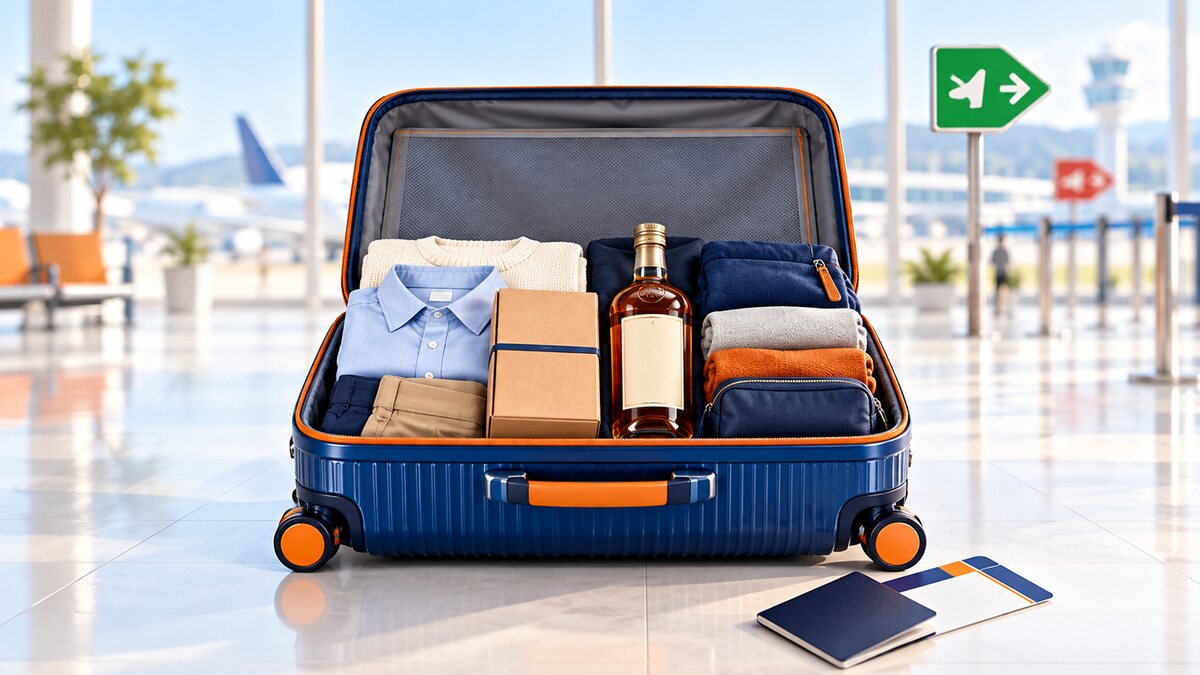
- Duty-free tobacco and alcohol: 1 carton = 10 packs = 200 cigarettes (20 cigarettes per pack); travelers age 20 or older may bring 1 carton of cigarettes duty free, with up to 5 cartons (1,000 cigarettes) allowed if declared and duty-paid and anything beyond that returned abroad; and 1.5 liters of alcohol (age 18 or older; increased from 1 liter effective 2025/1/25), with a maximum of 5 liters if declared and duty-paid.
- Must be declared through the red channel: tobacco or alcohol over the duty-free quantity, baggage worth more than the NT$35,000 allowance (increased from NT$20,000 effective 2024/6/26), foreign currency cash exceeding the equivalent of US$10,000, more than NT$100,000 in New Taiwan dollars, or more than RMB 20,000.
- Strictly prohibited: e-cigarettes/vapes, heated tobacco products not approved by the Ministry of Health and Welfare, meat products from disease-affected areas (a first pork-product offence carries a NT$200,000 fine), illegal drugs, counterfeit goods, and protected wildlife or related products.
- Undeclared excess may be confiscated and fined. Voluntary red-channel declaration and tax payment allow release only when the goods remain within the statutory declaration limit and have no prohibition, restriction, or missing-document issue.
Sources: Customs Administration, Ministry of Finance; official Ministry of Finance announcements (baggage allowance increased to NT$35,000 on 2024/6/26; alcohol allowance increased to 1.5 liters on 2025/1/25); and Ministry of Health and Welfare. See the cited references at the end of this page.

📅 Last updated: 2026-10-29 (reviewed against Taipei Customs, the Ministry of Finance and the original legal texts: corrected that heated tobacco purchased abroad may not be brought in, the legal basis for one carton of cigarettes, the date of the e-cigarette draft, and the source for the sake tariff) · ✍️ HowBridge Consolidation Editorial Team · 🛡️ Compiled from Customs announcements and current regulations
🖼️ 2026-10-29: 3 explanatory illustrations added; regulatory figures and explanations remain as reviewed on 2026-10-29.
Duty-Free Allowances for Tobacco, Alcohol and Goods
Duty-free allowances for arriving travelers cover three categories: tobacco products, alcohol, and general baggage items, and the government has expanded them repeatedly over the past two years. The former NT$20,000 allowance had not been adjusted for many years and was raised to NT$35,000 effective 2024/6/26. The duty-free quantity for alcohol was also increased from 1 liter to 1.5 liters effective 2025/1/25.

| Category | Duty-Free Quantity or Allowance |
|---|---|
| Tobacco products (age 20 or older; choose one of the four options—quantities cannot be combined) | 200 cigarettes (1 carton), 25 cigars, 1 pound of smoking tobacco, or 200 designated tobacco products approved by the Ministry of Health and Welfare (heated tobacco products; effective 2026/2/1) |
| Alcohol (age 18 or older) | 1.5 liters (increased from 1 liter effective 2025/1/25, with no limit on the number of bottles) |
| Total value of general baggage items | Duty-free allowance of NT$35,000 (increased from NT$20,000 effective 2024/6/26) |
| Cash in foreign currencies | Amounts exceeding the equivalent of US$10,000 must be declared |
| New Taiwan dollars / Renminbi | More than NT$100,000 in New Taiwan dollars or RMB 20,000 must be declared |
Note: For travelers who clearly appear to be bringing in goods for profit, or who travel frequently—entering or leaving Taiwan at least twice within 30 days or at least six times within six months—and have a record of violations, Customs may halve the quantity and value of the baggage items they carry under Article 16 of the Regulations Governing Customs Inspection, Duty Assessment and Release of Inbound Passengers' Baggage. Bringing in goods for profit does not require a prior record of violations.
How Much Duty and Tax Must You Pay on Excess Tobacco or Alcohol?
For each excess carton of cigarettes (200 cigarettes), the actual duty and tax payable is approximately NT$750~980. The NT$318 tobacco and alcohol tax and NT$200 Tobacco Health and Welfare Surcharge are fixed quantity-based charges totaling NT$518; customs duty of 27% and business tax of 5% vary with the customs-assessed value. The excess must remain within the statutory declaration limit below and have no other prohibition, restriction, or missing-document issue; only then may it be released after voluntary red-channel declaration and tax payment. Voluntary declaration does not make prohibited or restricted goods, or quantities above the statutory limit, admissible.
| Duty or Tax | Statutory Rate | Estimate for 1 Excess Carton (200 Cigarettes), Based on a Customs Value of NT$800 |
|---|---|---|
| Import duty | Column I rate: 27% (CCC 24022000006) | NT$216 |
| Tobacco and alcohol tax (cigarettes) | NT$1,590 per 1,000 cigarettes | NT$318 |
| Tobacco Health and Welfare Surcharge | NT$1,000 per 1,000 cigarettes | NT$200 |
| Business tax | (Customs value + import duty + tobacco and alcohol tax + Tobacco Health and Welfare Surcharge) × 5% | NT$77 |
| Total duties and taxes payable | — | Approximately NT$811 |
Of this amount, NT$518—the tobacco and alcohol tax plus Tobacco Health and Welfare Surcharge—is a fixed quantity-based charge that does not change with the price. Import duty and business tax are calculated using the customs-assessed value. A customs value between NT$600~1,300 results in a total of approximately NT$750~980. For alcohol, the business tax base is (customs value + alcohol tax + import duty) × 5% and does not include the Tobacco Health and Welfare Surcharge.
Alcohol is subject to quantity-based tobacco and alcohol tax according to its category: beer is taxed at NT$26 per liter; distilled spirits such as whisky and brandy are taxed at NT$2.5 per liter for each degree of alcohol content, equal to CN¥20 per liter at 40% alcohol; reprocessed alcoholic beverages over 20% alcohol are taxed at NT$185 per liter, while those at or below 20% are taxed at NT$7 per liter for each degree of alcohol content; cooking wine is taxed at NT$9 per liter.
Maximum Quantities Eligible for Declaration and Duty Payment
Quantities above the duty-free allowance cannot be imported for personal use without limit simply by paying duties and taxes. Under import regulations, the maximum quantities are 1,000 cigarettes (5 cartons), 125 cigars, 5 pounds of smoking tobacco, or 1,000 designated tobacco products (heated tobacco products), and a total of 5 liters of alcohol. Alcohol from mainland China that is not approved for import is limited to 1 liter. When declared within these limits, duties and taxes may be paid without presenting a tobacco or alcohol importer license. Quantities exceeding these limits cannot be brought into Taiwan even if declared. They must be returned abroad or imported by a licensed importer under the Tobacco and Alcohol Administration Act. Parcels imported by post, express courier, or consolidated shipping are not eligible for the travelers' NT$35,000 duty-free allowance: they are duty free only when the duty-paying value is NT$2,000 or less, tobacco and alcohol are not included, and the exemption no longer applies from the 7th parcel within six months for the same recipient (Ministry of Finance Taxation Portal).
Special Warning for Heated Tobacco Products
In 2026, beginning February 1, travelers age 20 or older may bring in 200 units of a designated tobacco product (heated tobacco) that has passed the Ministry of Health and Welfare health-risk assessment, duty free, choosing one of four alternatives together with cigarettes, cigars, and smoking tobacco. Travelers may bring only designated tobacco products purchased through lawful domestic channels and approved by the Ministry of Health and Welfare (Article 15, Paragraph 1, Subparagraph 3 of the Tobacco Hazards Prevention Act); heated tobacco purchased abroad has not undergone Taiwan's health-risk assessment and may not be brought into Taiwan even if it is the same brand (PTS News, 2026/5/21, citing Taipei Customs). Unapproved heated tobacco products and e-cigarettes/vapes may not be imported; an ordinary traveler who imports them unlawfully may be fined NT$50,000 to NT$5 million under Article 26, Paragraph 2 of the Tobacco Hazards Prevention Act.
Verified against the HowBridge tariff database: the 27% customs duty rate on this page has been confirmed against our on-site tariff database, which as of 2026-10-29 holds 12,705 current customs import tariff entries (measured by HowBridge; synchronized automatically each week from the public tariff files of the Ministry of Finance's Customs Administration). CCC 24022000006, “cigarettes containing tobacco,” carries a Column I rate of 27%, which you can verify in real time on the tariff lookup page. The NT$811 estimate was calculated item by item by our editorial team using the statutory rates (customs duty 216 + tobacco and alcohol tax 318 + health and welfare surcharge 200 + business tax 77).
Rates are based on Articles 7 and 8 of the Tobacco and Alcohol Tax Act (National Taxation Bureau of Taipei, Ministry of Finance) and Article 4 of the Tobacco Hazards Prevention Act. Quantity limits and declaration requirements are based on the announcement by Keelung Customs, Customs Administration, Ministry of Finance. Customs assesses the customs value using verified pricing information, and the final amount is determined by Customs.
How much alcohol can you bring into Taiwan? What 1.5 litres means in bottles, and how over-quota duty is calculated
Each traveller may bring 1.5 litres of alcohol into Taiwan duty free, from age 18, with no limit on the number of bottles. The rule counts total volume only: two 750 ml wine bottles come to exactly 1.5 litres, two 700 ml whisky bottles leave room at 1.4 litres, two 720 ml sake bottles make 1.44 litres — but a third 750 ml bottle (2.25 litres) puts you 0.75 litres over.
Two relaxations are often confused. The age limit dropped from 20 to 18 on 1 January 2023; the quantity rose from 1 litre to 1.5 litres on 25 January 2025. Above the allowance you can still declare through the red channel and pay duty, up to a total of 5 litres; alcohol from mainland China that is not approved for import is capped at 1 litre. Beyond those caps the goods cannot enter even if declared — they must be returned or cleared as a commercial import.
Duty on alcohol is three parts: customs duty, tobacco and alcohol tax, and business tax. The customs duty varies sharply by type. Checked against our own tariff database (synced weekly from the Customs Administration's published tariff file; 12,705 current lines as of 2026-10-29), whisky (CCC 22083000000) and beer (22030000001) both carry a 0% column-1 rate, grape wine (22042100005) is 10%, and the fermented cereal beverage line that covers sake (22060010006) is the highest at 20%. Alcohol tax is charged by volume under Article 8 of the Tobacco and Alcohol Tax Act; business tax is a flat 5%.
Why is sake the expensive one? The customs duty on fermented cereal beverages, the category that covers sake (tariff line 22060010), long stood at 40% and was lowered to 20% after a 2019 amendment, which is today's column-1 rate (PTS News, reported 2019/5/31). In other words, one bottle over the limit can cost more than twice as much in duty for sake as for whisky — not because of alcohol strength, but because of the tariff line.

| Type (CCC line) | Column-1 customs duty | Alcohol tax (Act art. 8) | One bottle over the limit | Total, approx. |
|---|---|---|---|---|
| Red wine 750 ml / 13% 22042100005 | 10% | Other fermented: NT$7 per litre per degree | Value NT$800: duty 80 + alcohol tax 68 + business tax 47 | ≈ NT$195 |
| Whisky 700 ml / 40% 22083000000 | 0% | Distilled: NT$2.5 per litre per degree | Value NT$1,200: duty 0 + alcohol tax 70 + business tax 64 | ≈ NT$134 |
| Sake 720 ml / 15% 22060010006 (cereal) | 20% | Other fermented: NT$7 per litre per degree | Value NT$900: duty 180 + alcohol tax 76 + business tax 58 | ≈ NT$313 |
| Beer 500 ml × 3 = 1.5 L 22030000001 (CCC 22030000001) | 0% | Beer: NT$26 per litre | Value NT$300: duty 0 + alcohol tax 39 + business tax 17 | ≈ NT$56 |
- Only the volume above 1.5 litres is taxed, not the whole lot; the table prices one bottle over the limit. Customs assesses the dutiable value, so the final figure is whatever customs determines.
- Not declaring costs far more than declaring. The excess is confiscated and fined by volume: NT$500 per litre, rising to NT$2,000 per litre above 10% ABV. One undeclared 750 ml bottle of 13% wine beyond the 1.5-litre allowance draws NT$1,500 — nearly eight times the NT$195 you would have paid by declaring it.
- "No limit on bottles" does not mean "no limit on volume": six 330 ml beers come to 1.98 litres and are 0.48 litres over.
- Tobacco and alcohol bought at duty-free shops or on board the aircraft also count towards the duty-free quantities (1 carton of cigarettes, 1.5 litres of alcohol). The 1-litre cap on unapproved mainland Chinese alcohol is separate from the general 5-litre declaration cap.
Red Channel vs Green Channel

Red Channel (Declaration Required)
- Tobacco or alcohol exceeds the duty-free quantity
- Total value of baggage items exceeds NT$35,000
- Foreign currency cash exceeds the equivalent of US$10,000
- Controlled, quarantine-regulated, or other declarable items
Green Channel (Nothing to Declare)
- No declarable items
- Tobacco and alcohol are within duty-free quantities
- Total value of goods is within the duty-free allowance
- Customs may still conduct inspections
What Must Be Declared
If any of the following applies, complete a Republic of China Customs Declaration Form and use the red channel:
- Tobacco or alcohol exceeds the duty-free quantity
- Total value of baggage items exceeds the NT$35,000 duty-free allowance
- Foreign currency cash, including Hong Kong dollars and Macanese patacas, exceeds the equivalent of US$10,000
- More than NT$100,000 in New Taiwan dollars: this must be declared, and the excess cannot be brought in even if declared (Customs will have it returned abroad); if it is not declared, the excess is confiscated. Carrying an excess amount is in principle not open to ordinary applications, and the Central Bank approves only special individual cases (Article 18-1 of the Central Bank Act). More than RMB 20,000: this must be declared, and the excess is sealed and deposited with Customs by the traveler and may be taken out when leaving Taiwan
- The total face value of negotiable securities exceeds the equivalent of US$10,000, or the value of gold exceeds the equivalent of US$20,000, in which case a formal customs declaration is also required
- Controlled goods, animal or plant products and aquatic products subject to quarantine, unaccompanied baggage, or commercial samples
- Items with a total value above the equivalent of NT$500,000 that could be used for money laundering (meaning diamonds, gemstones, and platinum beyond personal-use purposes)—under Articles 2 and 3 of the Regulations Governing Declaration and Reporting of Inbound and Outbound Articles for Money Laundering Control
An honest declaration does not necessarily mean paying a large amount of tax. However, failing to declare a declarable item can have serious consequences, ranging from confiscation to fines or even criminal liability.
Strictly Prohibited Items
- E-cigarettes/vapes and similar tobacco products: completely prohibited; no person may manufacture, import, or sell them. Heated tobacco products may be carried in accordance with the rules only when they are designated tobacco products that have passed the Ministry of Health and Welfare health-risk assessment. Travelers may bring only designated tobacco products purchased through lawful domestic channels and approved by the Ministry of Health and Welfare (Article 15, Paragraph 1, Subparagraph 3 of the Tobacco Hazards Prevention Act); heated tobacco purchased abroad has not undergone Taiwan's health-risk assessment and may not be brought into Taiwan even if it is the same brand. Unapproved heated tobacco products may not be imported. An ordinary traveler may be fined NT$50,000~5 million under Article 26, Paragraph 2 of the Tobacco Hazards Prevention Act, while an unlawful commercial importer may be fined up to NT$50 million under Paragraph 1 (see Taiwan entry rules for e-cigarettes and heated tobacco).
- Meat products from disease-affected areas: To prevent African swine fever, illegally bringing pork products into Taiwan carries a NT$200,000 fine for the first offense and a maximum fine of NT$1 million. See Meat Smuggling and Disease Prevention.
- Illegal drugs, controlled medications, counterfeit goods, protected wildlife and related products, and animals, plants, or seeds that have not undergone quarantine. See the Complete List of Goods Prohibited from Import into Taiwan.
Penalties for Excess Quantities or Non-Declaration
- Undeclared excess tobacco or alcohol: the excess is confiscated, with separate fines by category—NT$1,000 per carton of cigarettes or designated tobacco products (heated tobacco products) containing 200 units, NT$3,000 per pound of smoking tobacco, NT$500 per 25 cigars (NT$4,000 per 25 hand-rolled cigars), and NT$500 per liter of alcohol, or NT$2,000 per liter when the alcohol content exceeds 10%. If voluntarily declared, paying approximately NT$811 per carton allows you to keep the cigarettes. If not declared, the cigarettes are confiscated and an additional fine of NT$1,000 per carton applies, making honest declaration clearly more economical. The amounts above are Customs' penalty guidelines; the statutory fine is NT$500~5,000 per carton or per liter.
- Bringing unapproved heated tobacco products or e-cigarettes/vapes into Taiwan: an ordinary traveler faces a fine of NT$50,000 to NT$5 million under Article 26, Paragraph 2 of the Tobacco Hazards Prevention Act and may be ordered to recall, destroy, or return the products abroad within a set period; a business that manufactures or imports them illegally faces a fine of NT$10 million to NT$50 million under Paragraph 1 of the same article. (NT$1,000萬–NT$5,000萬 for businesses.)
- Failure to declare or making a false declaration: handled under the Customs Anti-Smuggling Act and other applicable regulations. Undeclared foreign currency cash above the threshold is confiscated, as are undeclared excess New Taiwan dollars.
How to Bring Tobacco and Alcohol Home Legally? 4 Key Facts
✓ 4 Key Facts
- Use the red channel if you are unsure: When in doubt, declare it. An honest declaration often requires only payment of duties and taxes, without a severe penalty.
- Remember the tobacco and alcohol limits: 1 carton = 10 packs = 200 cigarettes, and only 1 carton is duty free; alcohol is 1.5 liters. Purchases from duty-free shops and on board the aircraft also count; if you exceed the limits, use the red channel to declare and pay duties and taxes.
- Do not bring e-cigarettes/vapes, heated tobacco products purchased abroad, or meat from disease-affected areas: you may bring only approved heated tobacco products purchased through lawful domestic channels.
- Declare large amounts of cash: You must declare foreign currency exceeding the equivalent of US$10,000, more than NT$100,000 in New Taiwan dollars, or more than RMB 20,000 to avoid violating the law.
Key Terms for Duty-Free Allowances on Arrival
- Red Channel (Declaration Required)
- The arrival customs channel for travelers who have something to declare. You must fill in a customs declaration form and use the red channel if you carry tobacco or alcohol above the duty-free quantities, baggage with a total value above NT$35,000, foreign currency in cash above the equivalent of US$10,000, more than NT$100,000 in New Taiwan dollars, more than RMB 20,000, or any other items that must be declared.
- Green Channel (Nothing to Declare)
- Adults aged 20 or over may carry the stated tobacco allowance; verify the current rules before travel.
- Duty-Free Allowance (Baggage Duty-Free Limit)
- The maximum value of personal-use baggage items that an arriving traveler may bring in free of customs duty. It is currently NT$35,000, raised from NT$20,000 effective 2024/6/26.
- A Carton of Cigarettes
- The retail packaging unit for cigarettes: 1 carton = 10 packs = 200 cigarettes (under Article 16, Subparagraph 3 of the Regulations Governing the Inspection, Taxation and Release of Baggage Carried by Inbound Passengers, “five small packs of cigarettes (twenty cigarettes per pack),” i.e. 20 cigarettes per pack; Article 8 of the Tobacco Hazards Prevention Act separately prohibits selling cigarettes in units of fewer than 20). Taiwan's duty-free allowance on arrival is exactly 1 carton of cigarettes (200 cigarettes, age 20 or older).
- Customs Value
- Only approved designated products may be carried; foreign purchase alone does not decide legality.
- Designated Tobacco Products (Heated Tobacco Products)
- Tobacco products that have passed the Ministry of Health and Welfare's health-risk assessment review. Beginning 2026/2/1, travelers age 20 or older may bring in 200 units duty-free, choosing one of the four options along with cigarettes, cigars, and smoking tobacco. Products that have not been approved may not be imported.
- Tobacco Health and Welfare Surcharge
- A surcharge levied on tobacco products under Article 4 of the Tobacco Hazards Prevention Act, at NT$1,000 per 1,000 cigarettes (NT$200 per carton of 200 cigarettes). Alcohol is not subject to the health and welfare surcharge.
- Maximum Quantities That May Be Declared
- The upper limit on quantities above the duty-free allowance that may still be declared for personal use and cleared by paying duties and taxes: 1,000 cigarettes (5 cartons), 125 cigars, 5 pounds of smoking tobacco, or 1,000 designated tobacco products; and a total of 5 liters of alcohol (1 liter for alcohol from mainland China that is not approved for import). Quantities above these limits cannot be brought into Taiwan even if declared. They must be returned abroad or imported by a licensed importer.
Frequently Asked Questions
Related Guides
- Taiwan Entry Rules for E-Cigarettes and Heated Tobacco Products
- Meat Smuggling and African Swine Fever
- Complete List of Goods Prohibited from Import into Taiwan
- Customs and Smuggling Violations in Online Shopping and Package Forwarding
- Complete Beginner's Guide to Package Consolidation and Forwarding to Taiwan
- A Complete Guide to Taiwan Import Customs Clearance (the customs knowledge hub this page belongs to)
Bought Too Much to Carry Home? Ship It with Package Forwarding
If it will not fit in your carry-on, use package forwarding for consolidated shipping, proper customs clearance, and transparent duties and fees.
Register Free to Learn About Compliant Package Forwarding